How Water Infiltration Damages Melbourne Balconies and Why Timely Repair Matters
Water is the most persistent and destructive force acting on Melbourne’s built environment. In the context of residential and commercial balconies. Uncontrolled water infiltration represents one of the most underestimated structural risks facing property owners across the city. What begins as a minor waterproofing failure a hairline crack in grout. A degraded membrane junction, a slow-draining outlet can escalate within a few Melbourne winters into significant structural. Damage that costs multiples of what early intervention would have required. Professional Balcony Leak Repair Melbourne services exist precisely to intercept this escalation. Only when property owners understand the mechanism of damage and act before it advances beyond the point of simple remediation.
This article examines how water enters balcony structures. The progressive stages of damage it causes, the standards that govern professional repair. What Melbourne property owners should expect from a compliant, rigorous repair process.
How Water Enters a Balcony Structure
Understanding water infiltration begins with understanding the anatomy of a balcony waterproofing system. A properly constructed balcony consists of a concrete slab or structural deck, a waterproofing membrane applied to the substrate. A tile adhesive bed, and the tile surface itself. The membrane is the critical layer it is the only component specifically designed to prevent water from reaching the structural slab. Every other layer is vulnerable to water ingress.
In Melbourne’s climate, several factors accelerate the deterioration of waterproofing systems. The city’s characteristic thermal cycling temperatures that shift significantly between summer and winter. Often within a single day causes building materials to expand and contract repeatedly throughout the year. This movement places continuous mechanical stress on grout joints, perimeter sealants, and membrane bond lines. Over time, that stress produces the entry points through which water begins its journey into the structure:
- Failed or delaminated waterproofing membrane the most serious failure mode, allowing water unrestricted access to the structural substrate
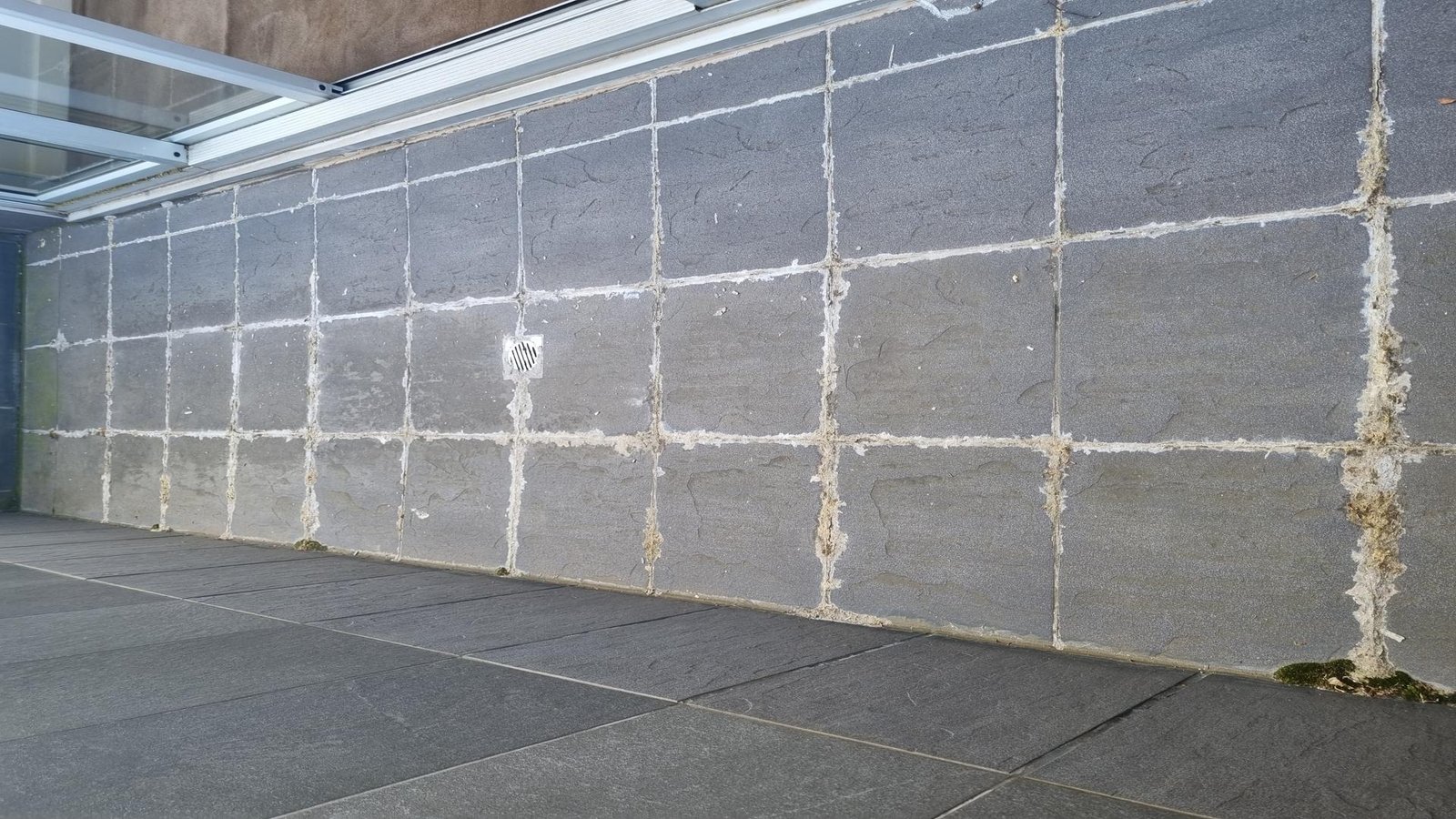
- Cracked or eroded tile grout particularly at tile-to-tile and tile-to-wall junctions where thermal movement is greatest
- Degraded perimeter sealants at balustrade bases, wall junctions, and drainage penetrations where flexible sealant has hardened and split
- Inadequate drainage fall where the balcony surface lacks sufficient slope toward the drain. Causing water to pond and find infiltration pathways under sustained pressure
- Blocked drainage outlets where accumulated debris prevents water from evacuating the surface, increasing the duration and depth of ponding
Melbourne’s annual winter rainfall compounds each of these failure modes. Water that finds an entry point does not simply sit there it migrates laterally through the substrate. Travelling far from its entry point and making accurate diagnosis without specialist detection equipment extremely difficult.
The Progressive Stages of Water Damage
Balcony water damage does not occur all at once. It progresses through identifiable stages, each more costly to remediate than the last. Recognizing which stage a balcony has reached is essential to scoping an appropriate repair response.
Stage 1 Surface Staining and Early Symptom Presentation
The earliest visible indicators of water infiltration include efflorescence (white mineral deposits on concrete surfaces), water staining on soffits or ceilings below the balcony, and tiles that sound hollow when tapped. At this stage, the waterproofing membrane may have localised failure points, but the structural substrate remains largely sound. Repair at Stage 1 is target, relatively low-cost, and highly effective.
Stage 2 Substrate Saturation and Adhesive Failure
As water continues to enter the structure unchecked, the tile adhesive bed becomes saturated. Tiles begin to de-bond from the substrate, creating additional pathways for water infiltration and accelerating the rate of damage. The substrate concrete begins to absorb moisture, leading to surface deterioration. Mould growth may become apparent in adjacent interior spaces. Repair at Stage 2 requires more extensive tile removal and substrate preparation, but the structural slab typically remains sound.
Stage 3 Concrete Carbonation and Reinforcement Corrosion
This is the critical threshold at which balcony water damage transitions from a waterproofing problem to a structural engineering problem. Persistent moisture within the concrete accelerates carbonation — a chemical process that reduces the concrete’s alkalinity and removes the passive protective layer surrounding steel reinforcement bars. Once that protection is lost, the reinforcement begins to corrode. Corroding steel expands, generating internal pressure that causes the surrounding concrete to crack and spall. Rust staining visible on the underside of a balcony slab is a definitive indicator that Stage 3 has been reach. Repair costs at this stage increase dramatically, requiring concrete reinstatement in addition to waterproofing work.
Stage 4 Structural Compromise
In the most advanced cases, sustained corrosion of structural reinforcement reduces the load-bearing capacity of the balcony slab itself. At this stage, the balcony may present a safety risk to occupants, and structural engineering assessment is required before any repair work commences. Remediation at Stage 4 may involve partial or complete slab replacement costs that can reach $50,000 to $100,000 or more for a standard apartment balcony.
The financial case for early intervention is unambiguous. A Stage 1 repair that might cost $3,000 to $6,000 left unaddressed will predictably escalate through these stages over two to five Melbourne winters, reaching a point where the same balcony requires $20,000 to $60,000 in remediation if structural replacement can be avoided entirely.
Australian Waterproofing Standards and What They Mean for Repairs
Professional balcony waterproofing repair in Australia is governed by Australian Standard AS 3740 waterproofing of Domestic Wet Areas. This standard specifies minimum requirements for waterproofing membrane selection, application methodology, upstand heights, drainage detailing, and acceptance testing. Compliance with AS 3740 is not optional it is a performance benchmark embedded in the National Construction Code (NCC) and enforceable under Victorian building regulations.
In Victoria, waterproofing work on balconies and external wet areas constitutes prescribed building work under the Building Act 1993. Any contractor carrying out this work must hold a current registration with the Victorian Building Authority (VBA) either as a Domestic Builder (Unlimited) or in an appropriate specialist category. Engaging an unregistered contractor to perform waterproofing work exposes property owners to several risks:
- Warranty voidance the statutory warranty protections under the Domestic Building Contracts Act 1995 apply only to work performed by registered builders
- Non-compliant installations membranes installed without AS 3740 compliance are highly likely to fail prematurely, leaving the property owner with no legal recourse
- Insurance implications property and strata insurance claims relating to water damage may be dispute if the original repair was performe by an unregistered contractor
When evaluating repair contractors, verification of VBA registration should be the first and non-negotiable step in the selection process.
The Professional Repair Process: From Detection to Verification
A properly executed balcony leak repair follows a structured methodology that begins with diagnosis and ends with verified performance. The stages of this process are:
- Leak detection and assessment: Non-invasive techniques including infrared thermal imaging and electronic moisture mapping identify the extent of water infiltration and precisely locate failure points before any tiles are remove. Flood testing ponding water on the balcony surface for a minimum of 24 hours confirms membrane integrity and entry point locations
- Targeted demolition: Tiles and adhesive beds are remove in the identified failure zone. Where substrate damage has occurred, degraded concrete is carefully excavated back to a sound bearing surface
- Substrate preparation and priming: The prepared surface is cleaned, primed, and any voids or cracks in the substrate are filled with appropriate repair mortars before waterproofing commences
- AS 3740-compliant membrane application: A new waterproofing membrane system is applied to the prepared substrate. Upstands are formed to the heights specified by AS 3740, all drainage penetrations are detailed with reinforcing fabric, and perimeter junctions are treated with flexible compound before membrane application
- Tile reinstatement: New tiles are fixed with exterior-grade flexible adhesive, with appropriate joint sizing and flexible perimeter sealants installed at all movement joints and junctions
- Final flood test and sign-off: The completed balcony is flood-tested to AS 3740 acceptance criteria before the repair is certified as complete
The team at Complete Construction Service applies this complete process across all Melbourne balcony repair projects — combining specialist detection equipment with licensed waterproofing expertise to deliver repairs that are correctly diagnosed, compliantly installed, and independently verified before handover.
Choosing the Right Specialist for Melbourne Balcony Repairs
The quality of a balcony leak repair is entirely dependent on the competence and compliance of the contractor engaged to perform it. Surface-level patching by non-specialist trades is one of the leading causes of repeat balcony waterproofing failure in Melbourne a cycle that costs property owners significantly more over time than a single correctly executed professional repair.
When selecting a contractor, the following criteria define the professional standard that Melbourne property owners should expect and demand:
- Current VBA registration for waterproofing or domestic building work — verifiable through the VBA public register at vba.vic.gov.au
- Demonstrable experience with balcony waterproofing membrane systems — not simply general tiling or construction
- A diagnostic methodology that includes leak detection technology and flood testing before specifying repair scope
- A written scope of works referencing AS 3740 compliance and the specific membrane system to be installed
- A written workmanship warranty covering the completed repair for a minimum of two years, separate from any manufacturer product warranty
- Flood testing upon completion, with written confirmation that the repair meets AS 3740 acceptance criteria
For Melbourne property owners ready to address balcony water damage with a repair that meets these standards, engaging an experienced provider of professional balcony leak repair in Melbourne ensures the work is performed correctly, compliantly, and with the documentation required to protect both the property and its owners.
FAQs
1. How do I know if my Melbourne balcony has a waterproofing membrane failure rather than just a surface grout problem?
The most reliable indicator is the return of water staining or damp patches on the ceiling or walls below the balcony after re-grouting or re-sealing. Hollow-sounding tiles, efflorescence on concrete surfaces, and mould in adjacent rooms that persists through dry weather are also strong indicators that the membrane not just the surface grout has failed. A professional flood test will confirm membrane integrity definitively.
2. Can I claim balcony leak repair costs through my strata or home insurance?
This depends on your specific policy terms, the cause of the leak, and whether the affected area is common property or within your lot. In strata buildings, responsibility for balcony waterproofing often falls to the Owners Corporation under the Owners Corporation Act 2006, depending on the balcony’s classification. Engage a VBA-registered contractor who can provide a written assessment report — this documentation is typically required to support any insurance or strata claim.
3. How long does a professional balcony leak repair take in Melbourne?
A standard balcony leak repair involving membrane replacement and tile reinstatement typically takes three to seven working days, depending on the size of the balcony, the extent of substrate damage, and the membrane system’s required curing time. The mandatory flood test adds a minimum of 24 hours to the completion timeline. Projects involving structural concrete reinstatement will take longer.
4. Is balcony waterproofing repair regulated in Victoria?
Yes. Waterproofing on balconies constitutes prescribed building work under Victoria’s Building Act 1993 and must be performed by a contractor registered with the Victorian Building Authority (VBA). The work must comply with Australian Standard AS 3740 and the applicable clauses of the National Construction Code (NCC). Engaging an unregistered contractor removes the statutory warranty protections that would otherwise apply under the Domestic Building Contracts Act 1995.
5. What is the difference between re-grouting a balcony and a full waterproofing repair?
Re-grouting replaces surface grout between tiles and is appropriate when the underlying waterproofing membrane remains intact and the grout failure is isolated. A full waterproofing repair involves removing tiles and adhesive beds. Repairing or replacing the membrane beneath, and reinstating the tiling system. Re-grouting a balcony with a failed membrane will not resolve the leak. Water will continue to bypass the new grout through the compromised membrane below.