LC Duplex OS2 in Campus Backbone Upgrades
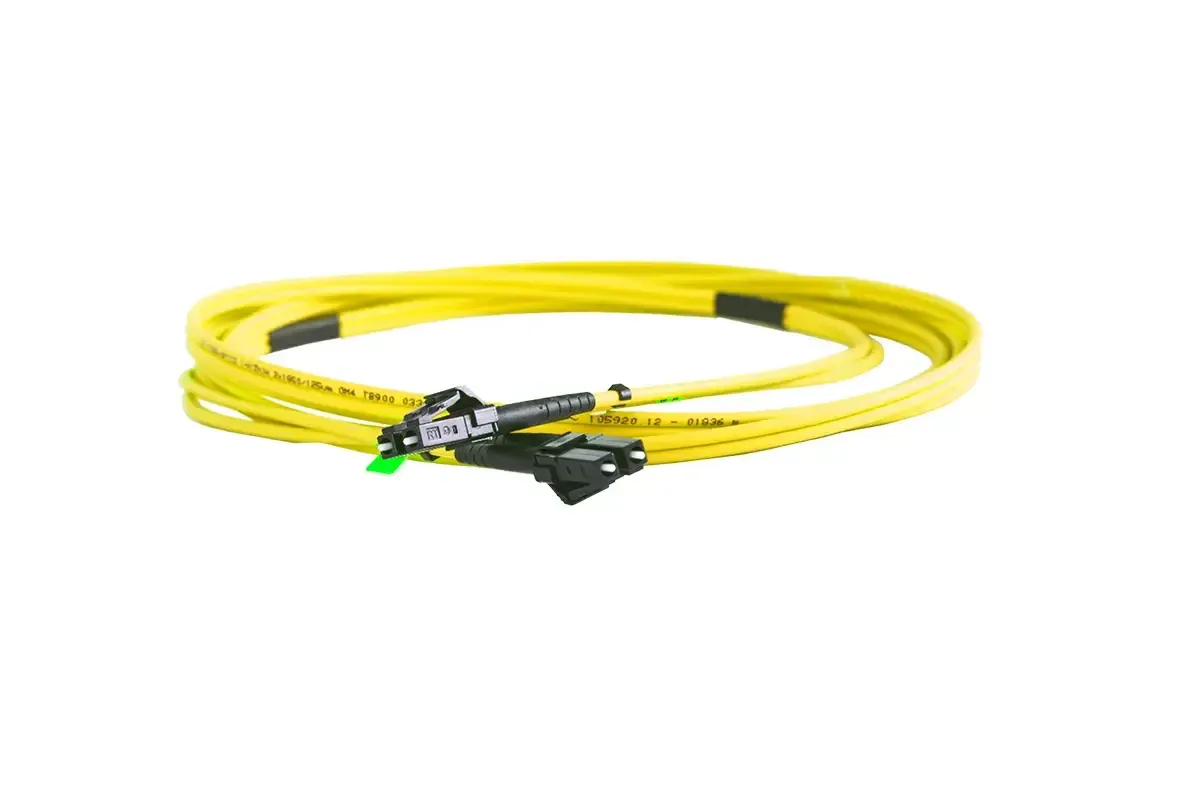
As enterprise campuses evolve to support cloud applications, high-definition video collaboration, Wi-Fi 6/6E, IoT devices, and increasingly data-intensive workflows, the backbone network becomes a critical performance foundation. While access-layer upgrades often receive the most attention, it is the campus backbone that determines long-term scalability. In this context, LC Duplex OS2 single-mode patch cords are emerging as a practical and future-ready solution for backbone modernization projects.
The Need for Campus Backbone Modernization
Many enterprise campuses were originally designed around 1G or 10G aggregation links, frequently using multimode fiber (OM3/OM4) for short inter-building or intra-building connections. At the time, this approach was cost-effective and sufficient. However, bandwidth demand has steadily increased due to virtualization, centralized storage, hybrid cloud connectivity, and wireless traffic aggregation.
When upgrading aggregation or core switches to 25G, 40G, 100G, or even 400G platforms, legacy multimode infrastructure can quickly become a limiting factor. Distance constraints, modal dispersion, and scalability ceilings make multimode less ideal for long-term backbone evolution.
LC Duplex OS2 patch cords, built on 9/125μm single-mode fiber, offer a straightforward path toward higher speeds and longer distances without requiring repeated cabling changes.
Enterprise Campus Backbone Scenarios
In a typical campus architecture, backbone links connect:
Access switches to distribution switches
Distribution to core switches
Building-to-building aggregation
Data center rooms within large campuses
These links often span from a few hundred meters to several kilometers. OS2 single-mode fiber supports transmission at 1310nm and 1550nm wavelengths with significantly lower attenuation compared to multimode fiber. This allows enterprises to deploy long-distance backbone links without worrying about future reach limitations.
LC duplex connectors, meanwhile, maintain a simple two-fiber architecture, aligning perfectly with duplex-based optical modules such as 10G LR, 25G LR, 100G CWDM4, and 400G FR4. This compatibility ensures that backbone upgrades can leverage mainstream transceiver ecosystems without specialized cabling systems.
Future Scalability: One Deployment, Multiple Generations
One of the most compelling advantages of LC Duplex OS2 in campus upgrades is its long-term scalability. Single-mode fiber provides a virtually unlimited bandwidth ceiling for most enterprise scenarios. Once installed, it can support multiple generations of optical modules without replacement.
For example, a backbone link initially deployed with 10G LR modules can later be upgraded to 25G, 100G, or even 400G simply by replacing transceivers, without touching the fiber plant. This “once installed, long-term use” model significantly reduces future capital expenditure and operational disruption.
In contrast, multimode upgrades often require either distance compromises or eventual re-cabling when moving to higher-speed standards. For campus environments with existing conduits, building constraints, or civil engineering limitations, avoiding repeated fiber installation is a major advantage.
Cost Considerations: Long-Term ROI
Although single-mode optics were historically more expensive, the price gap between single-mode and multimode transceivers has narrowed significantly in recent years. As hyperscale data centers adopt single-mode technologies at scale, manufacturing efficiencies have driven down module costs.
From a total cost of ownership (TCO) perspective, LC Duplex OS2 cabling provides a stronger long-term return on investment. Enterprises avoid:
Replacing the backbone fiber during each speed upgrade
Civil work associated with new fiber routes
Service downtime caused by re-cabling
The incremental upfront investment in OS2 infrastructure is often offset by reduced upgrade cycles and improved network lifespan.
Conclusion
Campus backbone upgrades require balancing performance, reliability, and financial planning. LC Duplex OS2 patch cords offer a practical solution that aligns with all three. They deliver long-distance capability, compatibility with modern duplex optical modules, and a scalable path toward future speeds.
Disclaimer:
This article is intended for informational purposes only and does not constitute technical, engineering, or investment advice. Network design decisions, including the selection of LC Duplex OS2 fiber infrastructure, should be based on specific site requirements, budget considerations, and professional consultation. Readers are encouraged to work with qualified network engineers or vendors before implementing backbone upgrade projects.