Why Self Editing is No Longer Enough Navigating the 2026 Standards of Australian Peer-Review
The Australian higher education landscape has undergone a seismic shift in the last twenty-four months. For graduate students at institutions like the University of Melbourne, ANU, or Monash, the bar for “acceptable” work has moved. In 2026, the Tertiary Education Quality and Standards Agency (TEQSA) has implemented more rigorous frameworks regarding “authentic authorship,” making the distinction between a first draft and a peer-ready manuscript wider than ever.
For the modern post-graduate, the traditional “self-edit”—a quick spell-check and a read-through—is no longer a viable strategy for high-distinction marks. Here is why the “solo” approach is failing, and how students are pivoting to meet new Australian standards.
The Rise of “Linguistic Integrity” in the AI Era
The primary challenge for 2026 graduates isn’t just avoiding plagiarism; it’s proving “cognitive ownership.” With the ubiquity of generative AI tools, Australian universities have pivoted their marking rubrics. Tutors are now trained to look for “homogenised prose”—writing that is technically correct but lacks the unique rhetorical “voice” expected of a Master’s or PhD candidate.
Self-editing often leaves a student’s work in a “grey zone.” You might fix your grammar, but you may inadvertently leave in the repetitive structures that trigger AI-detection flags or, worse, fail to meet the “Critical Reflection” criteria that now account for up to 40% of marks in many Australian humanities and business units. This is where professional essay editing service providers have shifted their focus—not just fixing commas, but ensuring the human argument is amplified above the digital noise.
The “Internalised Bias” Trap
Psychologically, the human brain is wired to see what it expects to see. When you have spent three weeks researching the impact of the 485 Visa changes on the Australian labor market, your brain “fills in” the gaps in your writing. You know what you meant to say, so you don’t notice that your third paragraph lacks a cohesive transition.
In the Australian peer-review system, “clarity of intent” is a core metric. If a peer reviewer or a marker has to work too hard to understand your thesis, the “Communication” portion of your rubric will suffer. A second pair of eyes identifies “logical leaps”—those moments where you moved from Point A to Point C without explaining Point B.
Navigating the Group of Eight (Go8) Standards
Australia’s leading universities have significantly tightened their “English Language Proficiency” (ELP) requirements for post-graduate outcomes. It is no longer enough for an international or domestic student to be “understandable.” To rank in the top decile, the prose must be “persuasive and authoritative.”
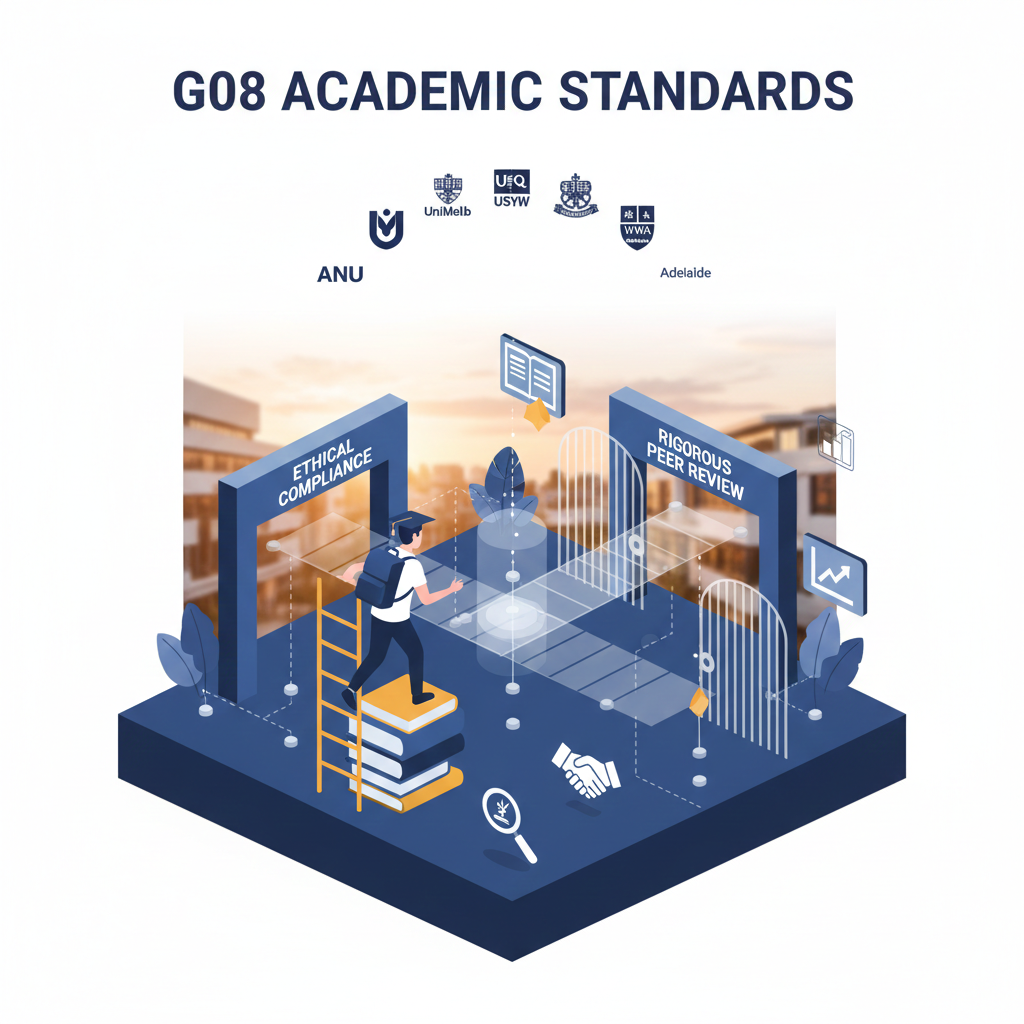
The shift toward “authentic assessment” means that many 2026 units require students to produce work that is ready for public or industry consumption. When the stakes include potential publication or a high-stakes industry placement, a self-edited paper often falls short of the “Australian Style” (the specific blend of British English spelling with a direct, evidence-based tone characteristic of AU academia).
The Cognitive Load of the “Time-Poor” Student
The 2026 cost-of-living crisis in major hubs like Sydney and Brisbane has forced many graduate students into increased work hours. When a student is balancing 20 hours of professional work with a full-time Master’s load, “decision fatigue” sets in.
By the time you reach the editing phase of a 5,000-word dissertation, your “executive function” is depleted. Research shows that tired writers are 70% less likely to catch structural errors. Seeking external essay help is becoming a standard management strategy—not a sign of weakness, but a professional acknowledgement that high-level output requires a “multi-stage pipeline.” Just as a professional journalist has an editor, a professional student requires a workflow that includes external verification.
Practical Steps for the 2026 Graduate
If you are currently preparing a submission, consider these three “Checkpoints of Integrity” before you hit upload:
- The “Vocalise” Test: Read your work aloud. If you stumble over a sentence, it is a structural red flag. Australian markers value “flow” over “florid” language.
- The Citation Audit: Ensure your references aren’t just present, but integrated. In 2026, “dropped-in” quotes are a sign of poor synthesis.
- The Tertiary Review: Before finalising, engage with a service or a peer who understands the Australian Graduate Level (AQF Level 8 or 9) requirements.
Conclusion: The New Standard of Excellence
The goal of Australian higher education in 2026 is to produce graduates who can communicate complex ideas with absolute clarity. Self-editing is a necessary first step, but it is rarely the final one. To compete in a globalised academic market, students must treat their essays as “professional products” that require the same quality assurance as a corporate report or a scientific journal entry.
About The Author
Min Seow is a Senior Academic Consultant specializing in Australian Higher Education trends. With a focus on the evolving landscape of TEQSA compliance and postgraduate literacy, Liam helps students navigate the transition from classroom theory to professional-grade research output.
Disclaimer
This article is intended for informational and educational purposes only. It does not constitute academic, legal, or institutional advice, nor does it replace official guidance issued by Australian universities, TEQSA, or individual faculties. Policies relating to assessment, academic integrity, and the use of editing or support services may vary between institutions and are subject to change.
Students are responsible for ensuring that any assistance they seek complies fully with their university’s academic integrity policies and assessment rules. The discussion of external editing, peer review, or support services in this article refers solely to permitted forms of academic assistance that do not involve contract cheating, ghostwriting, or misrepresentation of authorship.